
Dreamcatcher!
Use ChatGPT to work with dreams as a private Jungian dream analyst.

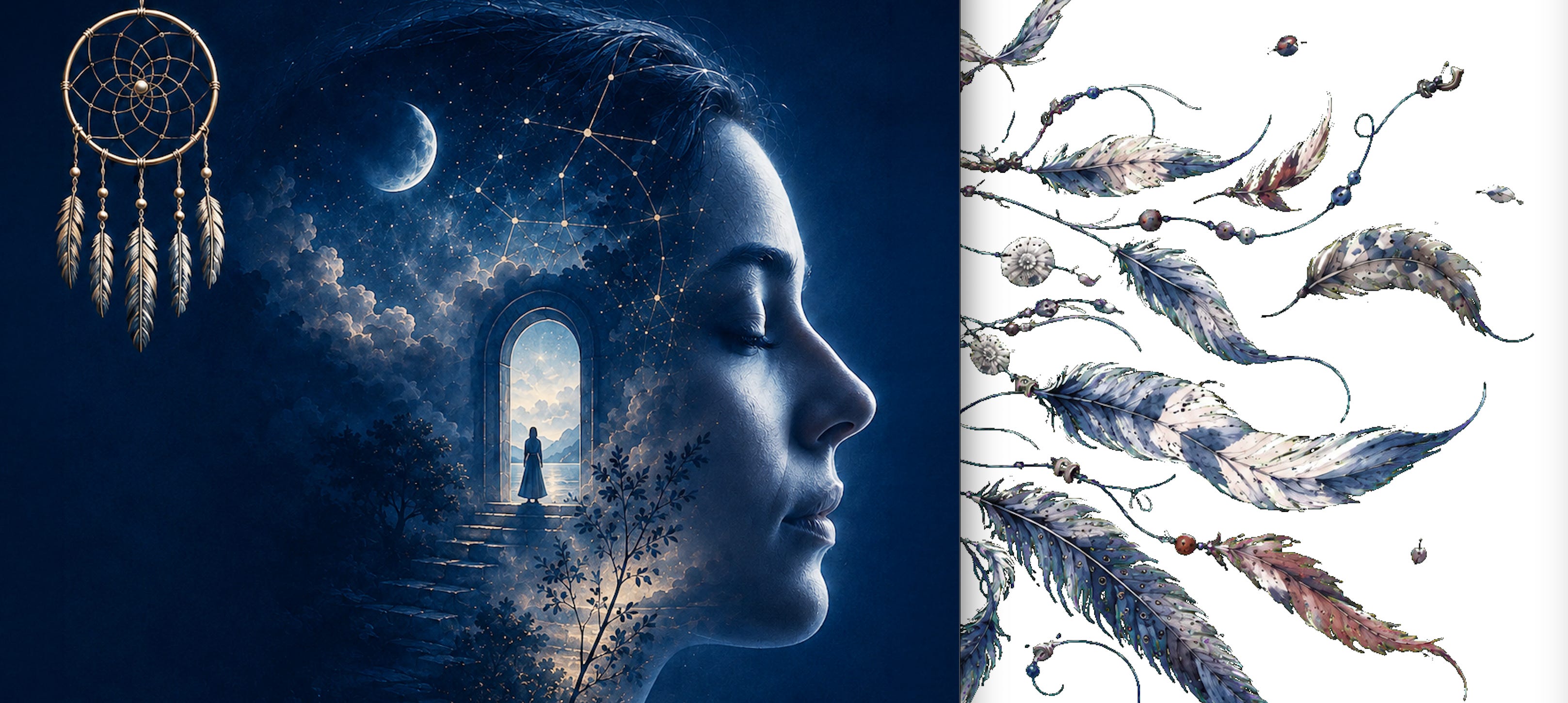
The human mind is a vast landscape, and as far we know we live mostly in one small illuminated part of it… the conscious part. Underneath is everything we forgot, buried, pushed away, inherited, feared, desired and never understood.
The unconscious. And unconscious speaks in images.
Dreams. Sudden visions. Strange coincidences. A symbol that follows you for years. A person who appears in a dream and somehow knows more than you do.
Jung spent his life entering this territory and so do I.
In The Red Book he documented his own descent into the unconscious through visions, symbols, conversations and images. That journey became part of the ground from which his psychology grew.
For Jung, dreams were alive. They could expose a wound, reveal a conflict, show a possibility, give practical direction, open something spiritual, or bring forward a part of the psyche that consciousness had left behind.
And then there is the Shadow.
The Shadow holds what you pushed out of the picture of yourself. Anger. Fear. Desire. Power. Sensuality. Creativity. Instinct. Sometimes the darkest parts of us. Sometimes the most alive.
What you reject keeps living.
It appears in projection — in the people you cannot stand, the people you obsess over, the people who seem to carry something you have lost. It appears in sabotage, in the strange moment when success comes close and suddenly something in you pulls away. It appears in fascination, because sometimes we are magnetized by people who are living a part of us we never allowed ourselves to become.
This is why dreams can be so brutal and so beautiful. They show what the conscious mind edits out.
And sometimes what looks like the monster is carrying your real power if you know how to decode it. .
So I have worked with my own dreams for years. When ChatGPT appeared, I started using it almost immediately for this work. I kept experimenting with ways of guiding the conversation deeper, closer to Jung, closer to the actual dream, closer to the image itself.
And while the tool was evolving, I was refining the way I used it.
Hundreds of conversations. Hundreds of wrong turns. Bad interpretations. Over-explanations. Generic answers. Me trying again. Changing the prompts. Pushing it back toward the dream. Teaching it to ask instead of invent. Teaching it to stay with the image.
Basically: this method is built on hundreds of mistakes. :))
What came out of it is Dreamcatcher.
An ancient practice using an ultramodern tool.
You can set it up in 30 minutes and use it for years.
ABOUT DREAMCATCHER
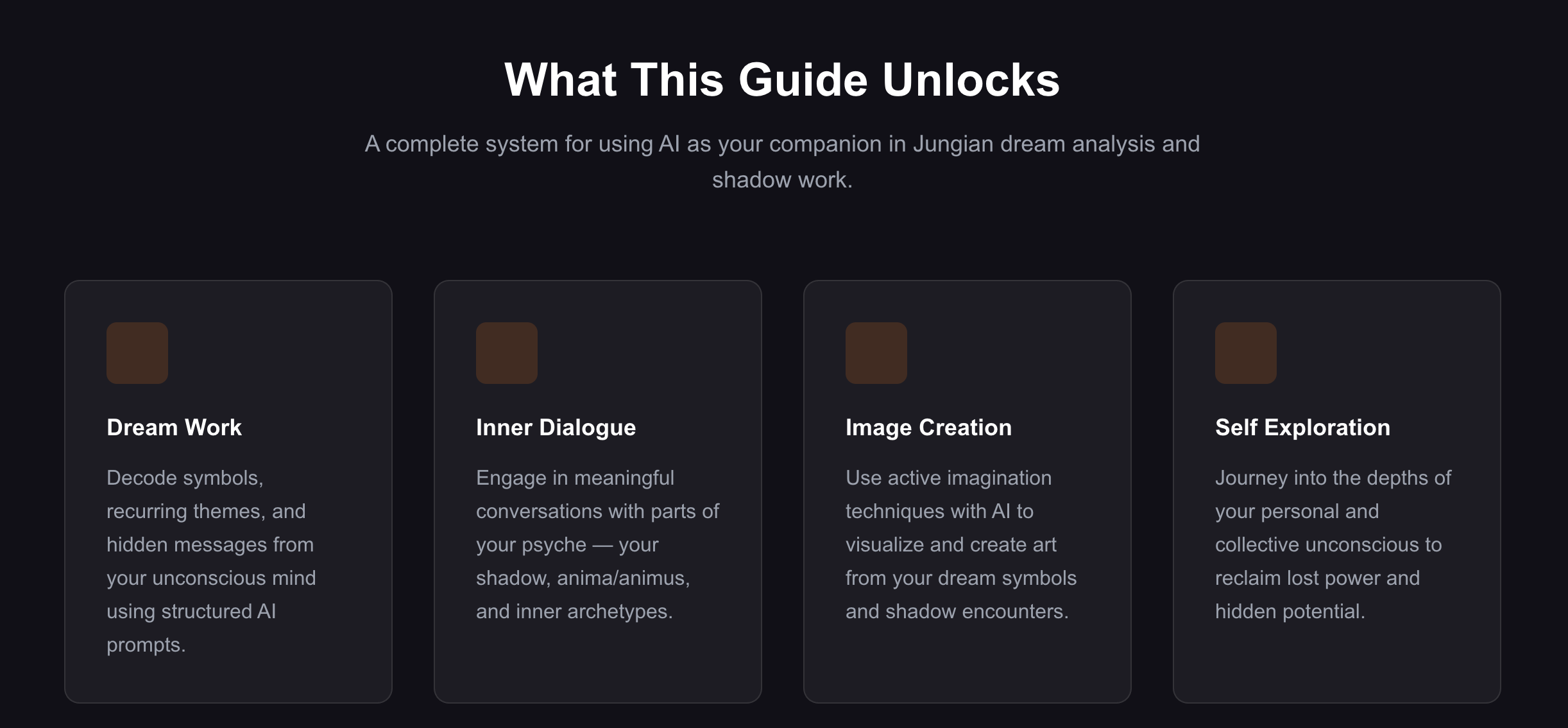
You can use it for:
– dream work
– inner dialogue
– active imagination
– image creation
– self-exploration
– client work
I’ve been walking with dreams for years, using them to enter the hidden parts of myself and listen to what lives underneath the surface.
Dreamcatcher grew out of that practice — dreams, Jung, active imagination, image-making, and years of experimenting with AI as a tool for going deeper into the conversation.
It is a journey into dreams, art, shadow, and the parts of us we usually leave outside the light. A space to meet what is hidden, give it form, and reclaim the energy that has been living there.
Subscribe if you want to be notified when next part will be out .
Grab a Dreamcatcher and dream big!
Joanna
About
I am Joanna , Artist and traveler. I live life on the road, years in Bali, Lombok . I follow dreams and the unseen since childhood. I’m still listening. This guide is what I use.